|
| |
|
Did you know?
An old story.
Some prehistoric drawings of moose hold by men or pulling sleds were found in Siberian caves. Archaeological evidences demonstrated that moose were present in almost all Western Europe 800.000 years ago. Bones were discovered in France in the Tournal cave at Bize (Aude).
|
| |
|
Let's hope |
|
Positive concerns in Alaska
When snowfalls are important, moose use open railroads to travel. This facilitates greatly crossing great snowy plains. During winter 1984-85, 384 moose were killed by trains in Alaska… From now on adjustments are made to take into consideration their presence. Barriers were erected around Anchorage Airport runways to block their access to the animals. The city considers building an underground passage to keep the traveling moose from the deadly crossing of the highway.
| |
 |
|
| |
|
|
|
|
| |
Scientific name :
Alces
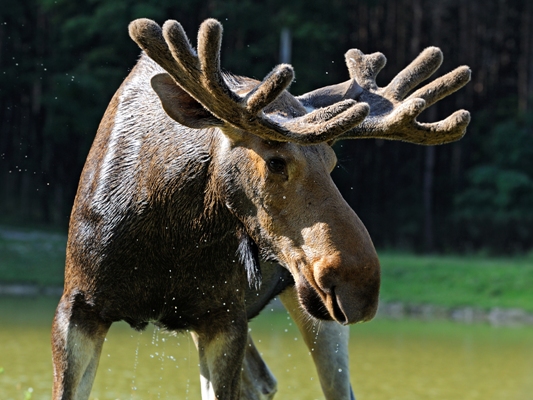
This palmate antlers animal is the biggest cervidae to date. A moose discovered in Alaska in 1897 still possess the record. It stood 7.7 feet (2,34 m) high at the shoulder, weighed 1.800 pounds (816 kg) and its antlers-span was 6.5 feet (1,99 m). This mammal is able to swim across lakes and large rivers (even fawns). It is the only cervidae grazing aquatic plants with the head underwater. Its large and webbed hoofs allow him to swim in the current. They are also pretty useful not to sink in soft grounds such as mud or snow.
|
| |
 |

| |
Where does it live?
Siberia, Scandinavia and Northern America.
| |
| |
 |
|
| |
|
Key figures |
It can be over 6.6 feet (2 m) high at the shoulder.
1.100 to 1.540 pounds (500 to 700 kg) for the bull.
770 to 1.280 pounds (350 to 580 kg) for the cow.
Up to 37 miles/hour (60 km/h).
New-borns weigh Approximately 33 pounds (15 kg). | |
 |
|
| |
|