|
| |
|
Did you know?
When he loves, he doesn’t count …
Langur is polygamous and lives in social groups of around 7 members with 1 or 2 adult males in the group. The male maintains close relationship with all of his females. A female can looking after the offspring of other females in the group, but only the mother suckles her young. Juveniles become independent at 1 year old and the adolescent males then leave the group.
|
| |
|
Let's hope |
|
Des lois pour le protéger
Some laws to protect him
The populations are falling because of human activities which come destruct his habitat. But it's also a species who suffer of illegal wildlife trade. Some laws which protect the Javan langur were adopted in 1999, and today we can find him in 3 Indonesian national parks.
| |
 |
|
| |
|
|
|
|
| |
Scientific name :
Trachypithecus auratus
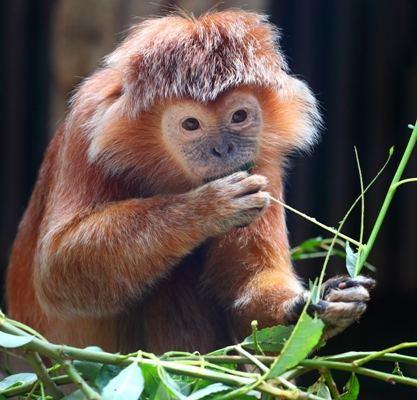
It's a long-haired monkey, which is glossy black with a brownish tinge on the sides of his body, legs, and sideburns. Females are most pale, with a yellowish white patch around the pubic area. Juveniles for both subspecies are orange in colour. They can keep this colour in growing up, but most of them will brown.
|
| |
 |

| |
Where does it live?
Javan langur comes from the island of Java and the smaller islands of Bali and Lombok, Indonesia, more specifically in mountain forests.
| |
| |
 |
|
| |
|
Key figures |
Head/body length : 44 to 75 cm
Tail length : 60 to 80 cm
Average weight : 7 kg
Life expectancy : 20 years in the wild
Gestation period : 210 days
| |
 |
|
| |
|