|
| |
|
Did you know?
It’s a cousin of the camel
Some of its traits resemble those of the camel. It has a very strong stomach and is very resistant. They live mainly in very poor areas in South America.
|
| |
|
Link man - animal |
|
Observe the differences
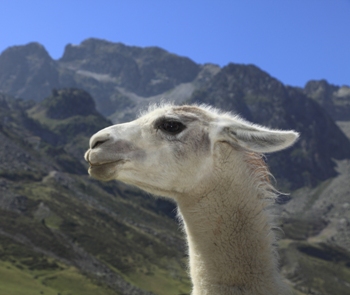
The llama’s visual and auditory communication is relatively easy to detect if you pay attention…this communication is very important for the owner to be aware of. These are animals that “speak,” listen to them and you can decipher the signals. The llama expresses itself by a range of sounds. They can communicate sadness, a warning to others of a possible danger, hostility to a rival or sexual satisfaction.
| |
 |
|
| |
|
|
|
|
| |
Scientific name :
Lama Glama
A heaven-sent animal for the Aymara Indians, llamas allow them to transport merchandise, to clothe themselves by spinning their wool, and to eat. In the wild, they are often found in mountain summits or on high plateaus of 2300 to 4000m altitude. There, they can graze tranquilly. This altitude is perfect for them because the hemoglobin in their blood can absorb much more oxygen than other mammals.
|
| |
 |

| |
Where does it live?
In the Andes, in Chili and southern Colombia.
| |
| |
 |
|
| |
|
Key figures |
1,15 meters high
1,20 to 1,75 meters long
80 to 160 kg
350 days of gestation
8 to 16 kg at birth
Life span: 20 years
| |
 |
|
| |
|