|
| |
|
Did you know?
It has a very developed sense of smell
They don’t hunt like dogs with their noses close to the ground, but with their ears standing up and their noses in the air: attentive to scents and noises in the breeze. Thanks to a Canadian study, we know that a wolf can perceive odors at a distance of about 300 m. It then freezes with its nose pointed in the direction of the prey. At this sign, all the others raise their heads to analyze the odor. Each one wags its tail and jumps. Then, staying silent despite their excitement, they approach as much as possible into the wind.
|
| |
|
Let’s hope |
|
The big bad wolf isn’t so bad
The wolf population in Canada is estimated to be between 50,000 and 60,000 wolfs. The species is not protected but numerous Canadian associations educate the population about the necessity of preservation. They try to dispel preconceived negative ideas about wolfs. Throughout the world, the wolf suffers from an unjust image based on stories and legends. It is most often more afraid of man than we imagine. What if we made peace with the wolf?
| |
 |
|
| |
|
|
|
|
| |
Scientific name :
Canis Lupus Occidentalis
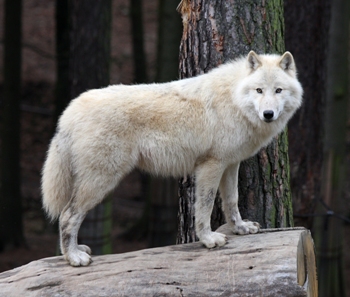
The Canadian wolf is a subspecies of the gray wolf that is found in western Canada and Alaska. It is also called Canadian and Alaskan wolf, Alberta wolf and Mackenzie Valley wolf. Its long thick legs are adapted to its environment: they allow it to travel over uneven terrain such as deep snow or the steep Rocky Mountains.
|
| |
 |

| |
Where does it live?
In Southeast Canada, in the Great Lakes region of Quebec and Ontario.
| |
| |
 |
|
| |
|
Key figures |
40 to 60 kg
Height at withers: 40 to 50cm
Length: 1m to 1,40 m
Lifespan: 15 to 20 years
Weight: an average of 55 kilos
Gestation: 60 days
It can travel up to 70km per day
| |
 |
|
| |
|